
Veröffentlicht: 30. Januar 1984
Text & Story © Ritchie Newton / Metalheads World
Anfang 1984 stand David Coverdale an einem Scheideweg.
Whitesnake waren längst eine feste Größe in Europa. Die Band hatte erfolgreiche Alben veröffentlicht, große Hallen gefüllt und sich mit ihrem bluesgetränkten Hard Rock eine treue Fangemeinde aufgebaut. Doch Coverdale wollte mehr.
Viel mehr.
Er wollte Amerika.
Er wollte die großen Arenen.
Er wollte Whitesnake auf dieselbe Stufe bringen wie die größten Rockbands der Welt.
Mit Slide It In begann genau diese Reise.
Heute wird oft über das selbstbetitelte Erfolgsalbum von 1987 gesprochen, das mit Hits wie Here I Go Again, Still Of The Night und Is This Love weltweit Millionen verkaufte. Doch die eigentliche Geschichte begann bereits drei Jahre früher.
Slide It In war das Album, das die Tür zur Weltkarriere aufstieß.
Die Transformation beginnt
Bis Anfang der Achtziger galten Whitesnake als klassische britische Hardrock-Band.
Tief verwurzelt im Blues.
Beeinflusst von Bands wie Deep Purple, bei denen Frontmann David Coverdale einst selbst gesungen hatte.
Doch Coverdale erkannte früh, dass sich der Musikmarkt veränderte.
Amerikanische Bands dominierten zunehmend die MTV-Landschaft.
Melodischer Hard Rock wurde größer.
Die Produktionen wurden moderner.
Whitesnake mussten sich weiterentwickeln, wenn sie dauerhaft ganz oben mitspielen wollten.
Slide It In wurde zur perfekten Mischung aus den Wurzeln der Band und ihrer zukünftigen Ausrichtung.
David Coverdale in absoluter Höchstform
Wenn man heute über die größten Rocksänger aller Zeiten spricht, fällt zwangsläufig der Name David Coverdale.
Auf Slide It In liefert er eine seiner stärksten Leistungen überhaupt ab.
Seine Stimme klingt kraftvoll.
Dreckig.
Verführerisch.
Emotional.
Und vor allem absolut selbstbewusst.
Von der ersten bis zur letzten Minute trägt Coverdale dieses Album mit einer Präsenz, die nur wenige Frontmänner erreichen.
Man hört förmlich, dass hier ein Mann singt, der genau weiß, wohin er will.
Die Songs
Bereits der Opener Gambler macht unmissverständlich klar, dass Whitesnake härter und aggressiver geworden sind.
Der Titeltrack Slide It In entwickelte sich schnell zu einem der bekanntesten Songs der Bandgeschichte.
Das markante Gitarrenriff, der eingängige Refrain und Coverdales typische Doppeldeutigkeiten machten den Song zu einem Live-Klassiker.
Mit Slow An‘ Easy kehrt die Band zu ihren bluesigen Wurzeln zurück und liefert gleichzeitig einen ihrer coolsten Groover überhaupt.
Dann folgt mit Love Ain’t No Stranger einer der ganz großen Whitesnake-Momente.
Eine Ballade voller Gefühl, Leidenschaft und Melancholie.
Bis heute gehört der Song zu den absoluten Fan-Favoriten.
Auch Standing In The Shadow, Hungry For Love, Guilty Of Love und Need Your Love So Bad zeigen eindrucksvoll, wie konstant hoch das Niveau dieses Albums ist.
Hier gibt es keine Füller.
Jeder Song hat seine Berechtigung.
Die John-Sykes-Revolution
Eine der spannendsten Geschichten rund um Slide It In spielte sich hinter den Kulissen ab.
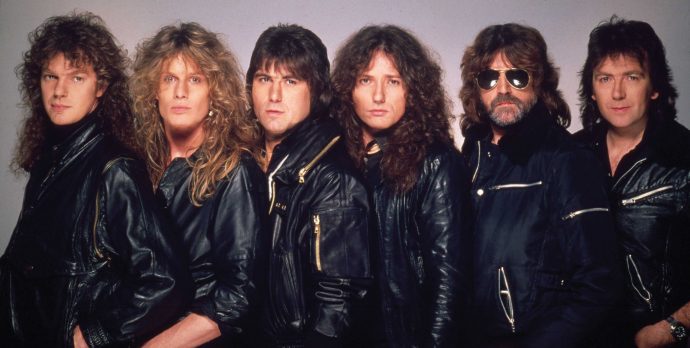
Die ursprüngliche europäische Version entstand noch mit Gitarrist Micky Moody und Bassist Colin Hodgkinson.
Doch als Coverdale den amerikanischen Markt ins Visier nahm, wurden Teile des Albums neu bearbeitet.
Der neu verpflichtete Gitarrist John Sykes spielte zahlreiche Gitarrenparts neu ein.
Zusammen mit Bassist Neil Murray entstand eine deutlich modernere und härtere Version des Albums.
Rückblickend war dies einer der wichtigsten Schritte in der Geschichte von Whitesnake.
Denn Sykes brachte genau jene Mischung aus Härte, Melodie und Virtuosität mit, die später den Sound von 1987 prägen sollte.
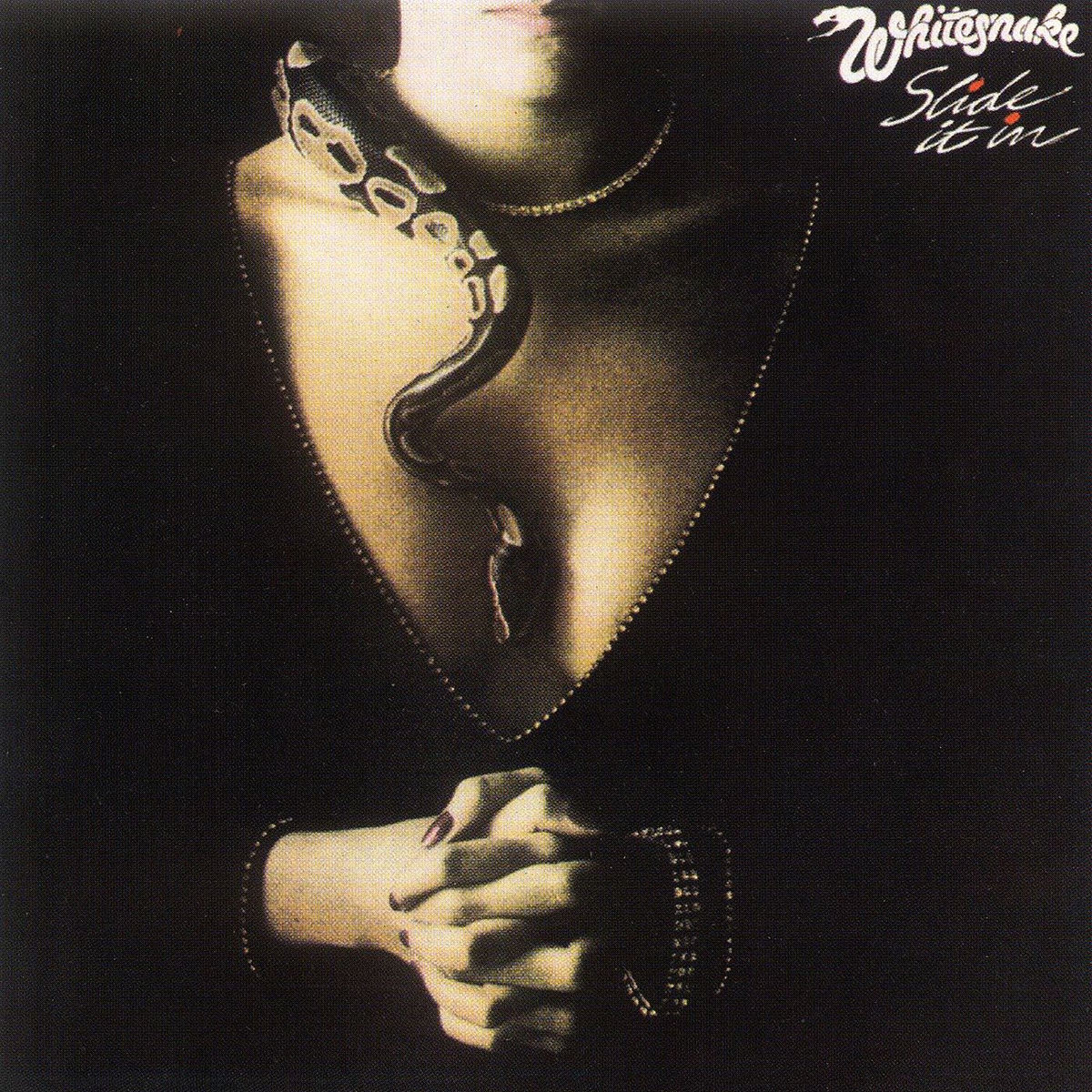
Das Cover – Pure Achtzigerjahre
Auch optisch setzte Slide It In ein Ausrufezeichen.
Das Albumcover zählt bis heute zu den bekanntesten Whitesnake-Artworks überhaupt.
Zu sehen ist ein geheimnisvolles Schwarz-Weiß-Motiv mit geöffnetem Reißverschluss, nackter Haut und dem markanten Whitesnake-Schlangenanhänger.
Elegant.
Erotisch.
Provokant.
Das Cover spiegelte perfekt die sinnliche und selbstbewusste Rock’n’Roll-Attitüde wider, die David Coverdale und Whitesnake Mitte der Achtziger verkörperten.
Während viele Hardrock-Bands dieser Zeit auf spektakuläre Illustrationen oder Bandfotos setzten, entschieden sich Whitesnake für ein stilvolles und zugleich gewagtes Motiv, das sofort Wiedererkennungswert besaß.
Heute gilt das Artwork als eines der ikonischsten Hard-Rock-Cover der 1980er Jahre.
Der fehlende Baustein zur Welteroberung
Viele Fans betrachten 1987 als das ultimative Whitesnake-Album.
Doch ohne Slide It In wäre dieser Erfolg kaum möglich gewesen.
Hier entwickelte die Band erstmals jene Mischung aus britischem Hard Rock, amerikanischem Arena-Rock und eingängigen Melodien, die später Millionen begeistern sollte.
Dieses Album legte das Fundament.
Es zeigte die Richtung.
Und es bewies, dass Whitesnake bereit waren, den nächsten Schritt zu gehen.
Mein persönlicher Rückblick
Für mich ist Slide It In vielleicht das spannendste Album der gesamten Whitesnake-Diskografie.
Nicht, weil es das erfolgreichste war.
Sondern weil man hier eine Band hört, die sich gerade neu erfindet.
Man hört die Vergangenheit.
Man hört die Zukunft.
Und genau dazwischen entsteht etwas Besonderes.
Eine Band, die ihre Wurzeln nicht vergisst, aber trotzdem bereit ist, neue Wege zu gehen.
Fazit
Slide It In ist weit mehr als nur ein weiteres Whitesnake-Album.
Es ist der Moment, in dem aus einer erfolgreichen britischen Hardrock-Band ein zukünftiger Weltstar wurde.
David Coverdale liefert eine Gesangsleistung für die Ewigkeit.
Die Songs sind durchweg stark.
Die Gitarrenarbeit ist überragend.
Und die Mischung aus Blues, Hard Rock und Arena-Attitüde funktioniert auch über vierzig Jahre später noch hervorragend.
Wer verstehen möchte, wie Whitesnake zur Weltklasse aufstiegen, muss bei Slide It In anfangen.
Hier begann die Reise.
Hier entstand die Vision.
Und hier wurde der Grundstein für den späteren Welterfolg gelegt.
Metalheads World Bewertung: 10/10 – Ein unverzichtbarer Hard-Rock-Klassiker der Achtzigerjahre.
HARD & HEAVY CLASSICS
WHITESNAKE – SLIDE IT IN
Released: January 30, 1984 (UK)
Text & Story © Ritchie Newton / Metalheads World
There are albums that solidify a band’s success.
There are albums that change careers.
And then there are those special albums that mark the transition from one era to the next.
For Whitesnake, Slide It In was exactly that kind of album.
Today, most people talk about the multi-million-selling self-titled album from 1987. About Here I Go Again, Still Of The Night, or Is This Love. But the truth is this: without Slide It In, that worldwide breakthrough would probably never have happened.
This album served as the bridge between the bluesy British hard rock of Whitesnake’s early years and the arena rock giant that would conquer the world just a few years later.
David Coverdale Wanted More
By the early 1980s, Whitesnake had already built an outstanding reputation.
With albums such as Ready An‘ Willing, Come An‘ Get It, and Saints & Sinners, the band had become one of Europe’s most successful hard rock acts.
But frontman David Coverdale was thinking bigger.
Much bigger.
The former Deep Purple singer wanted to conquer the American market.
He wanted to fill arenas.
He wanted to turn Whitesnake into an international brand.
Slide It In was the first major step toward that goal.
Coverdale at His Best
Anyone listening to this album today immediately understands why David Coverdale is considered one of the greatest rock voices of his generation.
His vocals sound powerful.
Confident.
Emotional.
And at the same time incredibly effortless.
Whether on the heavier tracks or the emotional moments, Coverdale delivers a performance that ranks among the strongest of his entire career.
His voice carries the album from beginning to end.
The Songs
The opening track, Gambler, immediately makes it clear where the band is heading.
Whitesnake sound heavier.
More direct.
More confident.
The title track, Slide It In, quickly became one of the band’s most recognizable classics.
Its memorable riff, infectious chorus, and trademark double-entendre lyrics turned it into a permanent fixture of the band’s live shows.
With Slow An‘ Easy, Whitesnake showcase their bluesy roots.
Love Ain’t No Stranger remains one of the greatest power ballads in the band’s history and, for many fans, one of the emotional highlights of the entire Whitesnake catalog.
Songs such as Standing In The Shadow, Guilty Of Love, Hungry For Love, and Need Your Love So Bad further demonstrate the exceptional songwriting quality found throughout the album.
There is virtually no filler here.
Two Versions – One Album
One of the most fascinating stories surrounding Slide It In is the fact that there are actually two different versions of the album.
The original European version was recorded with guitarist Micky Moody and bassist Colin Hodgkinson.
For the American market, however, Coverdale later decided to make extensive changes.
New guitarist John Sykes and bassist Neil Murray re-recorded numerous guitar and bass parts.
The result was a noticeably heavier and more modern version of the album.
To this day, fans continue to debate which version is superior.
One thing is certain:
John Sykes brought exactly the level of aggression and intensity that Whitesnake needed for their later global success.
John Sykes Changes Everything
Looking back, the arrival of John Sykes was one of the most important moments in Whitesnake’s history.
His guitar playing was more aggressive.
More modern.
More metallic.
His influence is already clearly audible on Slide It In and would reach its peak on the 1987 album.
Many music journalists consider Slide It In to be the missing link between the classic Whitesnake years and the band’s later American success.
The Legendary Cover
Visually, Slide It In made a statement as well.
To this day, the album cover remains one of the most recognizable pieces of artwork in Whitesnake’s history.
The iconic image features an unzipped jacket revealing bare skin and the famous Whitesnake serpent pendant hanging around the neck.
Elegant.
Sensual.
Provocative.
The artwork perfectly reflected the confident and seductive rock ’n‘ roll attitude that David Coverdale and Whitesnake embodied during the mid-1980s.
While many hard rock bands of the era relied on elaborate illustrations or traditional band photographs, Whitesnake chose a stylish and daring concept that immediately stood out from the crowd.
The result was an image that became instantly recognizable and has remained one of the most iconic hard rock album covers of the 1980s.
More than forty years later, it still captures the glamour, mystery, and attitude that defined an unforgettable era of rock music.
The Road to World Domination
Although Slide It In did not achieve the massive sales figures of the 1987 album, it was still a tremendous success.
The album sold strongly around the world and opened the doors to the American market for Whitesnake.
Particularly in the United States, the band gained a significant number of new fans.
Many of the elements that would later captivate millions were already in place:
The huge choruses.
The powerful guitars.
The catchy melodies.
The balance between heaviness and emotion.
Everything was already there.
My Personal Reflection
For me, Slide It In remains one of the strongest hard rock albums of the 1980s.
It still possesses the raw charm of the early Whitesnake years while sounding modern enough to pave the way for the band’s future world domination.
You can hear a band that is hungry.
A band that wants more.
A band willing to take risks.
And that is exactly what makes this album so fascinating.
Final Verdict
Slide It In is far more than just another Whitesnake album.
It is the turning point.
The moment when a successful British hard rock band began its transformation into a future global superstar.
David Coverdale delivers one of the finest vocal performances of his career.
The songs are consistently strong.
The production is powerful.
The guitar work is outstanding.
More than forty years later, the album still sounds fresh, energetic, and completely timeless.
Anyone wanting to understand how Whitesnake rose to world-class status simply cannot overlook Slide It In.
Metalheads World Rating: 10/10 – A hard rock masterpiece and one of the most important albums of the 1980s.
Über den Autor